From Lone Star Roots to the World Stage: Texas Athletes Who Went Global
Texas Makes Athletes. The World Decides What to Do With Them.
Grow up in Texas, and the sports script practically writes itself. You play football. Maybe basketball. If you're in the right part of the state, baseball. You dream in Big 12 colors or SEC stadiums, and if things go really well, you end up on an NFL Sunday. That's the path. Everyone knows it.
Except when they don't follow it.
A quieter, less-celebrated story runs alongside the traditional Texas sports narrative — one about athletes who took everything the Lone Star State gave them and carried it somewhere unexpected. To the Olympics. To European soccer leagues. To international competitions that most of their hometown fans couldn't find on a map. These are the athletes who broke the regional ceiling entirely, and their journeys reveal something important about what Texas sports culture actually produces.
The Foundation Travels
Before getting into the names and the sports, it's worth understanding what Texas actually gives its athletes — because it's not sport-specific. The state's athletic infrastructure is genuinely world-class. Training facilities at major universities rival professional setups. The competitive density of Texas prep sports means that by the time an athlete reaches their late teens, they've already experienced pressure, adversity, and high-stakes performance in ways that peers from less competitive environments simply haven't.
"Texas doesn't just develop athletes for Texas sports," said one sports performance coach who has worked with both college programs and Olympic hopefuls. "It develops competitors. The mental toughness, the coachability, the ability to perform when something real is on the line — those things transfer to any sport, anywhere in the world."
That transferability is exactly what shows up when you look at Texas-born athletes who made it on international stages.
The Olympic Thread
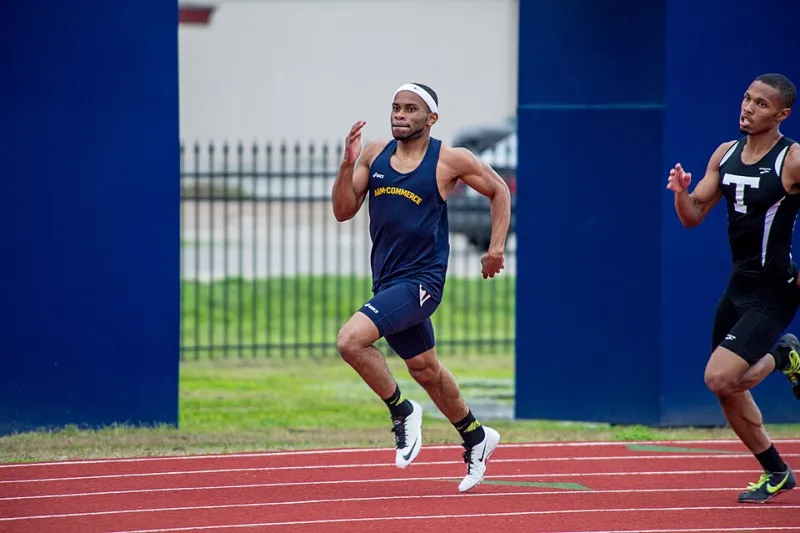
Texas has quietly produced a steady stream of Olympic athletes across disciplines that rarely make the Friday night highlight reel. Track and field, swimming, wrestling, and shooting sports have all seen Texas athletes represent the United States — and in some cases, other nations — at the highest level.
What's interesting about many of these stories isn't just the athletic achievement. It's the origin. A number of Texas-born Olympic athletes started in traditional Texas sports before finding their international calling. The physical base built through years of high school football or basketball didn't go to waste — it just got redirected.
Swimmers who grew up in Texas benefited from a year-round training climate and a club swimming culture that, particularly in Houston and the Dallas area, has produced legitimate world-class talent. Track athletes coming out of Texas high schools have consistently ranked among the nation's best, feeding into college programs and eventually national teams.
The common thread is infrastructure meeting intensity. Texas has both, and in combination, they create athletes who are ready to compete globally even when their sport of choice isn't the one on everybody's billboard.
Soccer's Texas Roots Run Deeper Than You'd Think
Texas and soccer have had a complicated relationship for decades. Football still dominates the cultural conversation, but the numbers tell a different story. Texas is home to one of the largest youth soccer populations in the country, and the state has quietly produced players who've gone on to professional careers in Major League Soccer and beyond — including in European leagues where the competition is genuinely international.
The Texas-to-Europe pipeline in soccer is real, even if it doesn't get the same coverage as football recruiting. Players who developed in Texas club programs — often competing against top-tier international competition through youth tournaments that attract clubs from across the globe — have found themselves prepared for professional environments in ways that surprised even the scouts who signed them.
"Texas kids who come through the top club programs here are used to playing against different styles," noted one MLS scout with deep roots in the Texas market. "They're not sheltered. By the time they're 17 or 18, they've seen formations and physical styles that a lot of American players don't encounter until they're in college or beyond."
For Texas-born players who went on to represent other national teams — a reality in a state with deep Hispanic and international community roots — the journey often starts in those same club programs, shaped by the same competitive culture that produces Friday night football stars.
When the Sport Is Unexpected
Perhaps the most striking stories are the ones nobody saw coming. Texas has produced competitive athletes in sports that feel almost counterintuitive given the state's identity — cricket players who emerged from Texas's South Asian communities and went on to compete at international amateur levels, Olympic-caliber archers who trained in rural parts of the state, and combat sports athletes who built world-ranked careers out of gyms that didn't look like much from the outside.
These athletes share something with the football players and the basketball stars: they were shaped by an environment that takes competition seriously. The sport was different. The standard wasn't.
"I didn't grow up thinking about going international," said one Texas-born athlete who competed in a combat sport at the world championship level. "I just grew up thinking about being the best. That's what you do in Texas. The sport almost doesn't matter — the expectation that you compete hard and you compete to win, that's baked in."
What It Says About Texas Sports Culture
The athletes who break out of the regional mold and reach international stages aren't anomalies. They're natural products of a sports culture that demands excellence regardless of context. Texas builds competitors, and competitors find their arenas.
What might be changing is awareness. As the global sports landscape becomes more visible — as soccer grows domestically, as Olympic sports get broader coverage, as combat sports and individual athletics attract larger audiences — the Texas athletes competing on those stages are getting more recognition than they once did.
That recognition matters, not just for the athletes themselves, but for the next generation watching them. When a kid in San Antonio sees a Texas-born athlete competing at the Olympics, or a player from their city suiting up for a European club, the ceiling moves. The script gets a little longer.
Texas has always made athletes who were ready for the biggest stage. It's just that sometimes, the biggest stage isn't the one everybody expected.