The Losses That Built Them: How Texas's Most Gutting Near-Misses Forged a Tougher Sports Culture

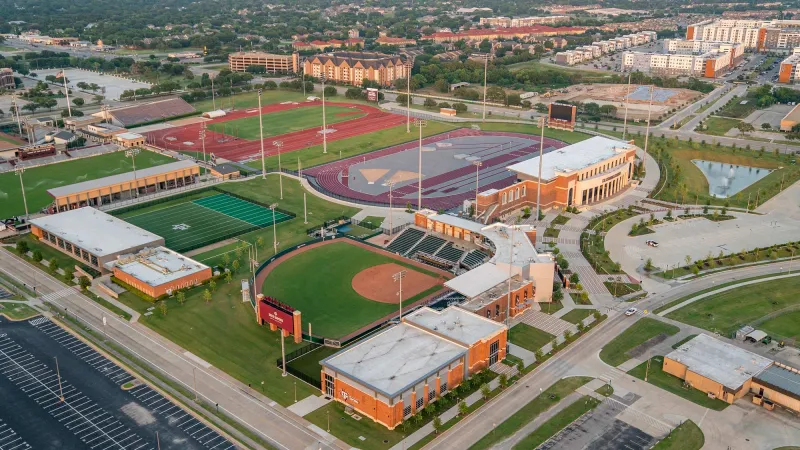
Photo: Allspamme, CC BY-SA 4.0, via Wikimedia Commons
There's a particular kind of silence that settles over a Texas stadium after a championship slips away. It's not just disappointment. It's something heavier — the specific weight of a thing that felt certain, that felt deserved, that somehow still didn't happen. Texans know that silence well. And over the generations, it's become one of the state's most underappreciated teachers.
This isn't a piece about failure for its own sake. It's about what gets built in the aftermath. Because if you look closely at the coaches, the programs, and the communities that came out the other side of Texas's most devastating near-misses, you'll find something worth understanding: the losses that hurt the most have often done the most lasting good.
The Rose Bowl That Still Stings
Start with January 4, 2006. The USC Trojans, riding a 34-game winning streak and carrying the weight of a dynasty, walked into the Rose Bowl as heavy favorites against Vince Young and the Texas Longhorns. What happened over the next four hours is still discussed in reverent tones across the state — a 41-38 Texas victory that cemented Vince Young as a legend.
But that's a win, not a loss. So why bring it up?
Because the road to that moment ran straight through the wreckage of a program that had spent years learning how to handle crushing disappointment. The 2001 Nebraska game. The near-misses under John Mackovic that shook the program to its foundation. The 2004 season that ended one win short of where Texas thought it belonged. Each of those moments deposited something into the cultural account that Mack Brown's program eventually drew from in Pasadena.
Texas didn't become a team capable of that Rose Bowl performance despite the painful years before it. They became capable of it because of them.
Friday Night's Forgotten Funerals
You don't have to look at the college level to find the lessons. In fact, some of the most formative heartbreaks in Texas sports history have played out under the Friday night lights of high school football.
The UIL playoffs are a brutal, unforgiving structure. Single-elimination, played deep into November and December, with entire communities packed into stadiums that hold more people than some small towns have residents. The teams that fall in the semifinals or the state championship game don't get a second chance that year. They go home, they sit with it over Christmas break, and they come back in the spring with something burning.
Coaches who've guided programs through those losses — and then watched those same players come back the following season — describe a transformation that's hard to put into words. There's a difference between a team that's hungry because they've never tasted it and a team that's hungry because they had it and lost it. The second kind is harder to beat.
Ask any longtime observer of Texas high school football about the programs that have sustained excellence over multiple decades and you'll notice a pattern: the dynasties are almost always built on at least one devastating early loss. It's the thing that calibrates the culture.
The Astros and the Long Memory
Texas's professional teams have their own chapter in this story, and arguably none is more instructive than the Houston Astros.
The 2005 World Series was the franchise's first appearance on baseball's biggest stage. They got swept by the Chicago White Sox in four games, and while the games were closer than the sweep suggests, the result was a gut-punch for a fan base and an organization that had waited a long time to get there. That loss sat with Houston for years.
What followed, of course, was a long rebuild — one that eventually produced a World Series title in 2017, though that championship came with its own complicated legacy. But somewhere between 2005 and that title run, the organization internalized something about how to build a roster that could handle October pressure. The scouts, the front office, and the coaching staff that assembled those championship-contending Astros teams were shaped, at least in part, by the memory of what it felt like to get there and come up empty.
Pain has a way of sharpening organizational thinking. You start asking harder questions about roster construction, about mental toughness, about what a player looks like when the moment gets too big. The 2005 sweep forced those questions in Houston. The answers took a while, but they eventually arrived.
What the Sidelines Taught the Stands
Here's the part of this conversation that doesn't get enough attention: the fans.
Texas sports culture is communal in a way that's genuinely unusual. When a team loses a heartbreaker in this state, the grief is shared across entire towns, entire school districts, entire metropolitan areas. That shared grief does something. It binds communities together around a common reference point, a shared scar that becomes part of the local identity.
The kids who were eight years old when their hometown team lost a state championship game grow up to be the parents cheering in the stands when the next generation takes the field. They bring that memory with them. It shapes how they talk about competition, about preparation, about what it means to show up when it counts.
In that way, the losses become instructional material that never really leaves the curriculum. They get passed down, informally and imperfectly, but persistently. The '99 team that lost in the finals becomes a cautionary tale about taking a lead for granted. The '08 squad that fell apart in the fourth quarter becomes the reason a coach now spends an extra twenty minutes every week on late-game situational preparation.
Losing Well Is Its Own Skill
This is maybe the most uncomfortable argument to make in a state that prides itself on winning: Texas's sports culture has gotten genuinely good at losing. Not at accepting losing, and not at being comfortable with it — but at processing it, learning from it, and converting it into something useful.
That's not a small thing. A lot of programs, a lot of communities, respond to devastating losses by fracturing — blaming coaches, blaming players, tearing apart the thing that was built. Texas has seen that too. But the programs that have endured, the ones that have sustained excellence across generations, tend to be the ones that figured out how to sit in the discomfort without letting it become destruction.
The Texas Statesman has covered a lot of championships. But some of the most important stories we've told have been about what happened the year after a team came home without the trophy. Those stories — of a locker room that chose to stay together, of a coaching staff that found the lesson instead of the excuse — are every bit as much a part of what makes Texas athletics worth watching.
The wins are easy to celebrate. It's the losses that reveal character. And in Texas, the character revealed has more often than not been worth celebrating too.