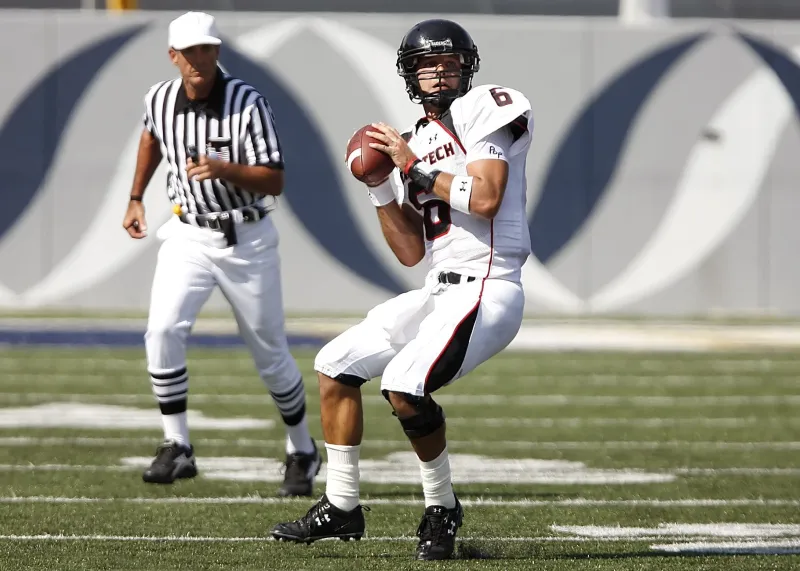
Bent But Not Broken: The Texas Athletes Who Clawed Their Way Back From the Brink

There's a moment every injured athlete knows — lying on the turf, or in a hospital bed, or on a training table, staring at the ceiling — when the future suddenly feels like a closed door. Surgeries scheduled, timelines uncertain, whispers starting. For some, that moment is the end. For others, it's the beginning of the most defining chapter of their career.
Texas has produced more than its share of the second kind.
From small-town high school standouts to professional athletes who refused to accept someone else's prognosis, the Lone Star State has a quiet but powerful tradition of comeback stories that deserve more than a footnote. These aren't just tales of physical recovery — they're studies in mental architecture, support systems, and the particular brand of stubbornness that seems to run deep in Texas athletic culture.
The Injury That Was Supposed to End Everything
Let's be honest about what we're talking about when we say "career-threatening." ACL tears, spinal injuries, torn labrums, fractured vertebrae — these aren't bumps and bruises. They're the kinds of diagnoses that send scouts updating their boards and agents quietly shifting their attention elsewhere. The medical timelines alone are brutal: twelve to eighteen months of rehabilitation for a serious knee injury, often longer before an athlete regains the explosive confidence they had before the trauma.
What separates the athletes who come back from those who don't isn't always physical. Surgeons can repair tendons. Strength coaches can rebuild muscle. But nobody can prescribe the mental framework required to trust your body again after it has failed you at the worst possible moment. That part has to come from somewhere else.
For many Texas athletes, it comes from the culture they were raised in.
The Texas Factor: Toughness as a Way of Life
This isn't mythology — it's sociology. Athletes who grew up playing Texas high school football, or competing in the state's hyper-competitive basketball and track circuits, are acclimated to pressure from an unusually young age. Friday night games in towns where football is the only entertainment for fifty miles. State championships that feel like life-or-death events to entire communities. The expectation, baked in early, that you don't quit — not because quitting is shameful, but because the people counting on you deserve better.
That conditioning doesn't disappear when a career-threatening injury arrives. In many cases, it intensifies. Athletes who've already proven they can perform under enormous external pressure have a psychological template to draw from when the stakes become deeply personal.
Coaches and trainers who work with Texas athletes frequently describe a similar pattern: an initial period of grief and frustration, followed by a pivot — almost instinctual — toward problem-solving. What do I need to do? Who do I need to talk to? What's the plan? The grieving happens, but it doesn't linger the way it might elsewhere.
The Support Architecture That Makes Comebacks Possible
It would be incomplete to tell these stories without acknowledging the infrastructure behind them. Texas's major programs — at the college and professional level — have invested heavily in sports medicine, performance training, and mental health resources over the past decade. The era of taping it up and playing through it has given way to a more sophisticated understanding of long-term athlete development.
But the support system that matters most often isn't institutional. It's personal. Family members who drove to early-morning rehab sessions. Position coaches who held roster spots open longer than anyone expected. Teammates who didn't treat the injured player like a ghost. These human elements show up again and again in the comeback stories that stick.
There's also the role of faith communities, which are deeply embedded in Texas athletic culture in ways that don't always get acknowledged in sports media. For many athletes, the spiritual dimension of recovery — the belief that the setback has a purpose, that the comeback is part of a larger story — provides a kind of psychological anchor that clinical rehabilitation alone can't offer.
What the Comebacks Actually Look Like
The most compelling comeback arcs share a few common threads. First, there's almost always a period of radical acceptance — the athlete stops fighting the injury timeline and starts working within it. Second, the best recoveries involve athletes who used the downtime to develop other aspects of their game: film study, leadership skills, technical refinements that pure athleticism had previously allowed them to skip. They come back smarter.
Third — and this is the one that coaches talk about most — the athletes who return to elite performance levels are almost always the ones who reset their identity. They stop defining themselves by what they used to be able to do and start building toward something new. The comeback isn't a restoration. It's a renovation.
The Lesson Texas Keeps Teaching
Every generation of Texas athletics produces a new set of these stories, and every generation of young athletes gets to watch them unfold. That visibility matters. When a high school kid in Lubbock or Beaumont watches a college or professional athlete from their region navigate a devastating injury and come back stronger, it plants something. A reference point. A proof of concept.
Texas doesn't have a monopoly on resilience. But it has an unusually rich tradition of putting that resilience on public display — in stadiums and arenas where the whole community is watching, rooting, and remembering.
The athletes who come back don't just reclaim their careers. They become part of the state's athletic mythology. And that mythology, in turn, shapes the next wave of competitors who will eventually face their own closed doors — and decide to kick them open.