Hungry for Glory: Why Texas's Toughest Losing Streaks Are Actually Pulling In Elite Recruits
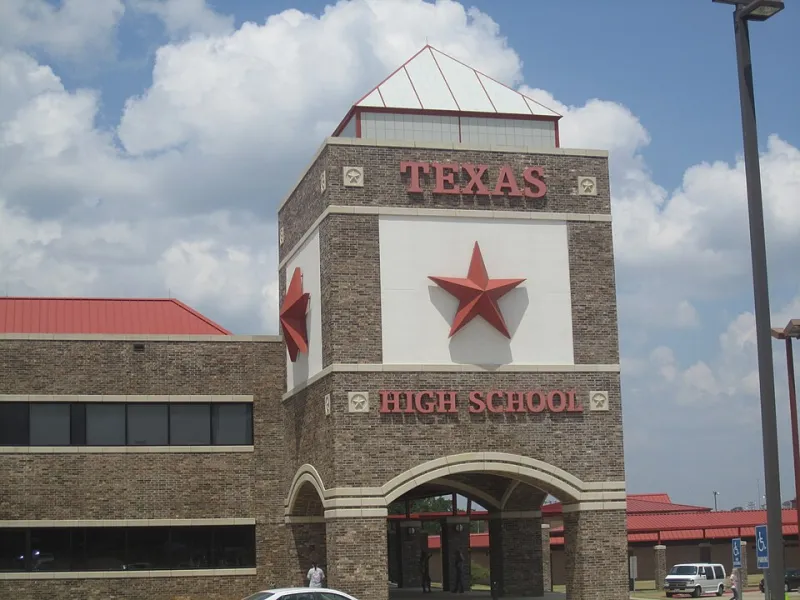
Photo: No machine-readable author provided. Billy Hathorn assumed (based on copyright claims)., CC BY 3.0, via Wikimedia Commons
Nobody wants to be part of a losing program. That's the conventional wisdom, and for a long time it held up pretty well. Elite recruits followed winning. They followed banners and rings and coaches who'd already proven they could get guys to the next level. The calculus was simple: go where the trophies are, because trophies attract more trophies.
But something strange has been happening in Texas recruiting circles over the last several years. Programs that should be radioactive — the ones with the heartbreaking playoff exits, the championship droughts that stretch long enough to become part of a town's identity, the programs that have spent years being almost good — are landing elite prospects. Not despite their recent history. Because of it.
Welcome to one of the more counterintuitive storylines in Texas high school and college athletics: the redemption narrative as recruiting pitch.
The Weight of Almost
Every Texas football fan knows the particular pain of almost. It's different from just losing. Losing is clean. You got beat, you go home, you come back next year. Almost is something else entirely. It's the fumble on the five-yard line with two minutes left. It's the overtime loss in the regional semifinal to a team you'd beaten twice before. It's the state championship that everyone in town had mentally already won, and then didn't.
These moments have a way of burrowing into a program's identity. They get replayed at booster dinners. They get referenced in locker room speeches for years afterward. And for a long time, the assumption was that this kind of baggage scared away top-tier recruits who wanted no part of a program still haunted by its own failures.
That assumption is getting a serious second look.
Coaches across Texas — at the high school and collegiate levels — are reporting something they didn't expect: elite prospects actively asking about the drought. Not to be warned off, but to understand it. To figure out if there's an opportunity buried inside the pain. These kids aren't running from the narrative. They want to write the next chapter.
The Redemption Pitch
Talk to a recruiting coordinator at a Texas program that's been through a rough stretch and you'll hear a version of the same thing: there's a certain kind of competitor who is specifically motivated by the idea of restoring something. Not building from scratch — restoring. There's a difference, and it matters.
Building from scratch is anonymous. Nobody outside your own circle is paying attention. But restoring a program that people care about — that a community has emotional scar tissue around — that's visible. That means something. The recruit who comes in and helps flip a struggling Texas program doesn't just get a championship ring if it works out. He gets a story. In Texas, stories matter enormously.
Several current players at programs that have recently emerged from extended down periods have described their recruitment in similar terms. The suffering wasn't a red flag. It was the point. One player who transferred into a program that had missed the playoffs for several consecutive years put it plainly: he wanted to be the guy who showed up when it was hard, not the guy who showed up after someone else did the hard part.
That mentality — showing up when it's hard — is exactly what coaches are pitching to prospects. And it's landing.
What Losing Culture Gets Right (When It Doesn't Break You)
There's an important distinction that coaches are careful to make. Not every struggling program develops the kind of culture that attracts elite recruits. Some programs that lose consistently do so because the infrastructure is broken — bad coaching, poor facilities, weak community support, no developmental pipeline. Those programs stay bad, and recruits are right to avoid them.
But a program that has been good, that has the bones of a winning culture, that has suffered specifically because of close calls and bad luck and tough draws rather than systemic failure — that's a different animal entirely. That program has something that a perpetual winner sometimes lacks: genuine hunger.
Hunger is underrated in recruiting. Championship programs can drift toward comfort. Players who've never experienced losing at a high level sometimes struggle to access the motivation that comes from having something to prove. A program that's been grinding through a drought, that has coaches and returning players who remember exactly what it felt like to fall short — that program has a chip on its shoulder that can't be manufactured.
Elite recruits who are themselves highly motivated tend to seek out that energy. They want to be around people who are hungry, because hunger is contagious in a locker room in a way that comfort rarely is.
The Texas Factor
This dynamic plays out in other states, but it hits differently in Texas for a reason that's hard to fully quantify but easy to feel if you've spent any time around the state's sports culture. In Texas, football programs aren't just athletic organizations. They're community institutions. A town's identity can be genuinely tied to how its program performs on Friday nights. The investment — emotional, financial, generational — is unlike almost anything else in American sports outside of a handful of comparable pockets.
That means the stakes of a drought are higher here than elsewhere. And correspondingly, the stakes of ending one are higher too. When a Texas program breaks a long losing streak or finally captures a championship after years of heartbreak, it doesn't just feel like a sports moment. It feels like something larger. Recruits who understand Texas football culture understand this. The ones who are drawn to struggling programs aren't naive — they know exactly how much it would mean to be part of the turnaround.
Coaches have started framing their drought years not as a liability to explain away, but as evidence of how much the community cares. You don't feel this much pain about something you don't love. The pain is proof of the investment. And that investment — those packed stands, those devoted boosters, those parents who live and breathe the program — is exactly what a recruit wants behind him when he's grinding through two-a-days in August.
The New Calculus
None of this means that top recruits are suddenly ignoring winning programs in favor of struggling ones across the board. The traditional calculus still applies in most situations. But at the margins — in the decisions that aren't already predetermined by proximity or family ties or obvious fit — the redemption narrative has real pull.
The programs in Texas that are figuring this out are getting ahead of something. They're not apologizing for their recent history. They're weaponizing it. They're walking into living rooms and telling families: your son has a chance to be the one who changes the story. In Texas, that's not a small offer.
Sometimes the most powerful recruiting pitch isn't a trophy case. Sometimes it's an empty one, and the promise of what comes next.